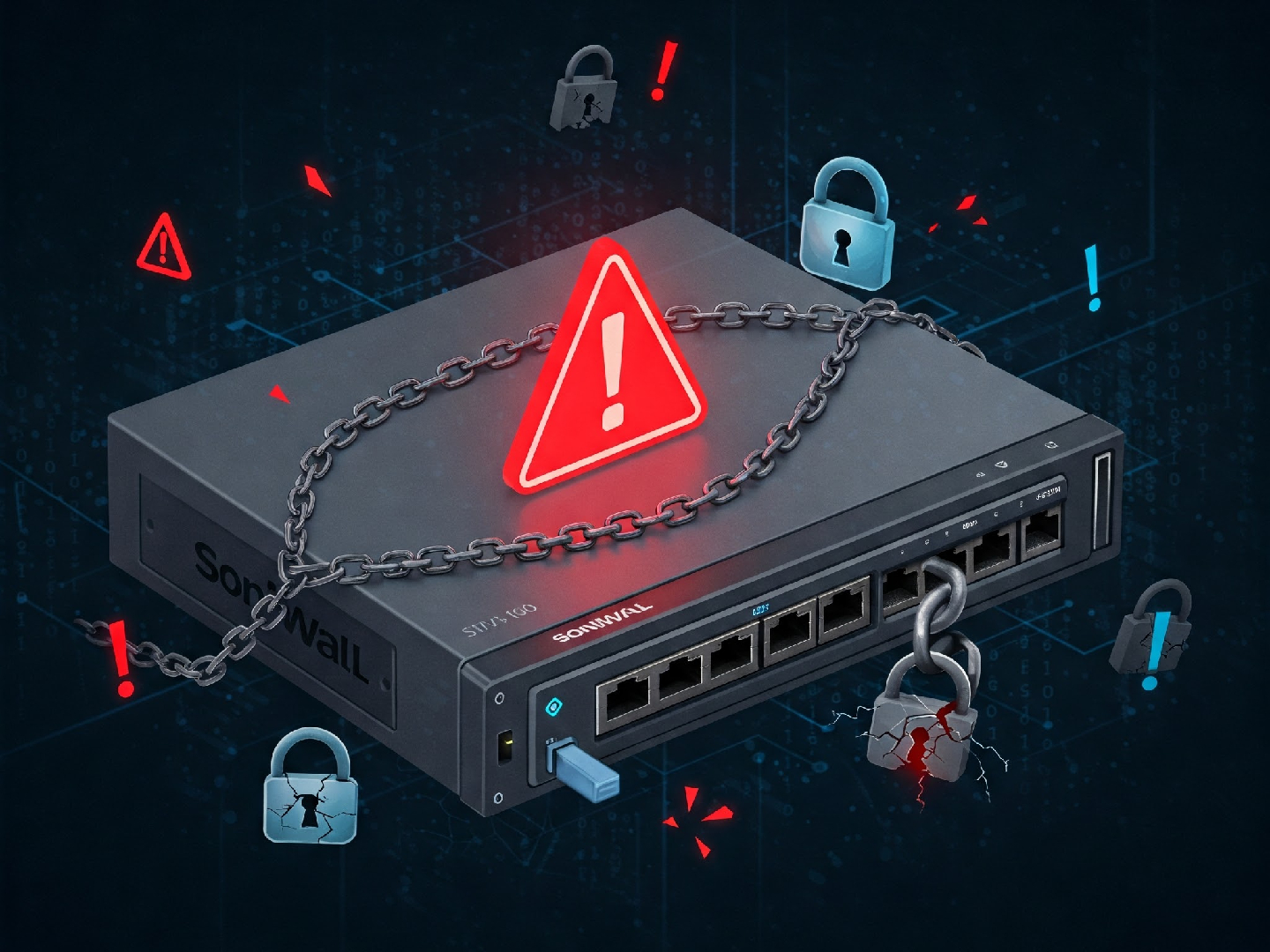
The Cybersecurity and Infrastructure Security Agency has expanded its Known Exploited Vulnerabilities catalog with the addition of a security issue impacting SonicWall devices. According to CISA, the vulnerability has been observed in active exploitation in the wild, posing severe operational risks to enterprise perimeters.
The flaw, tracked as CVE-2026-19868, is identified as a SonicWall SonicOS SSLVPN use of single-factor authentication vulnerability. Network security appliances and remote-access services remain frequent targets for malicious actors seeking an initial entry point into private enterprise networks.
Details on CVE-2026-19868
CISA warns that weaknesses involving authentication mechanisms on SSLVPN gateways represent a frequent attack vector for malicious cyber actors. Because virtual private network appliances sit on the perimeter of internal networks, successful exploitation often grants unauthorized users immediate reach into protected environments.
The agency verified active exploitation of CVE-2026-19868 before adding it to the catalog. Vulnerabilities added to this list meet specific thresholds, including confirmed exploitation in real-world attacks, an assigned CVE identification number, and the availability of mitigation guidance.
Federal Directives and BOD 26-04 Requirements
The addition triggers strict compliance mandates for Federal Civilian Executive Branch agencies governed by Binding Operational Directive 26-04, titled Prioritizing Security Updates Based on Risk. BOD 26-04 outlines vulnerability management standards across federal departments, mandating accelerated remediation timelines for high-risk weaknesses.
Under the directive, federal agencies must prioritize rapid remediation for vulnerabilities listed in the KEV Catalog that reside on publicly exposed assets and grant total control of the system post-exploitation. At the same time, the framework allows organizations to defer action on lower-risk issues to direct critical resources where threats are most pressing.
Crucially, BOD 26-04 establishes clear expectations regarding post-exploitation response. Beyond applying patches or configuration updates, federal agencies are required to assess whether threat actors managed to compromise targeted appliances before remediation measures were implemented.
Broader Impact and Defense Recommendations
Although the requirements outlined in BOD 26-04 formally apply only to federal civilian agencies, CISA strongly urges all private sector and critical infrastructure organizations to adopt a risk-based vulnerability management posture. Internet-facing appliances running remote access software should be prioritized above internal or lower-severity weaknesses.
Security teams managing SonicWall SonicOS devices should take immediate steps to secure exposed SSLVPN endpoints:
- Identify all internet-accessible SonicWall SonicOS instances and verify whether SSLVPN services are enabled.
- Prioritize the remediation of CVE-2026-19868 in accordance with vendor-provided guidance and security advisories.
- Inspect access logs, active sessions, and authentication records for signs that malicious actors accessed the system prior to mitigation.
- Enforce risk-based vulnerability management practices that focus defensive resources on vulnerabilities known to be leveraged by adversaries.
CISA continues to update the catalog as new threats emerge and maintains an active reporting channel for newly observed exploitation campaigns. Defenders identifying actively leveraged security bugs not currently tracked can submit details through CISA's formal KEV nomination process.