Suspected Chinese state-sponsored threat actors have re-engineered the EggStreme malware framework to evade security detection, deploying a new passive backdoor variant against government targets in the Philippines. The structural overhaul comes shortly after security researchers first detailed the framework, highlighting how quickly espionage operators adapt when their tooling is publicly documented.
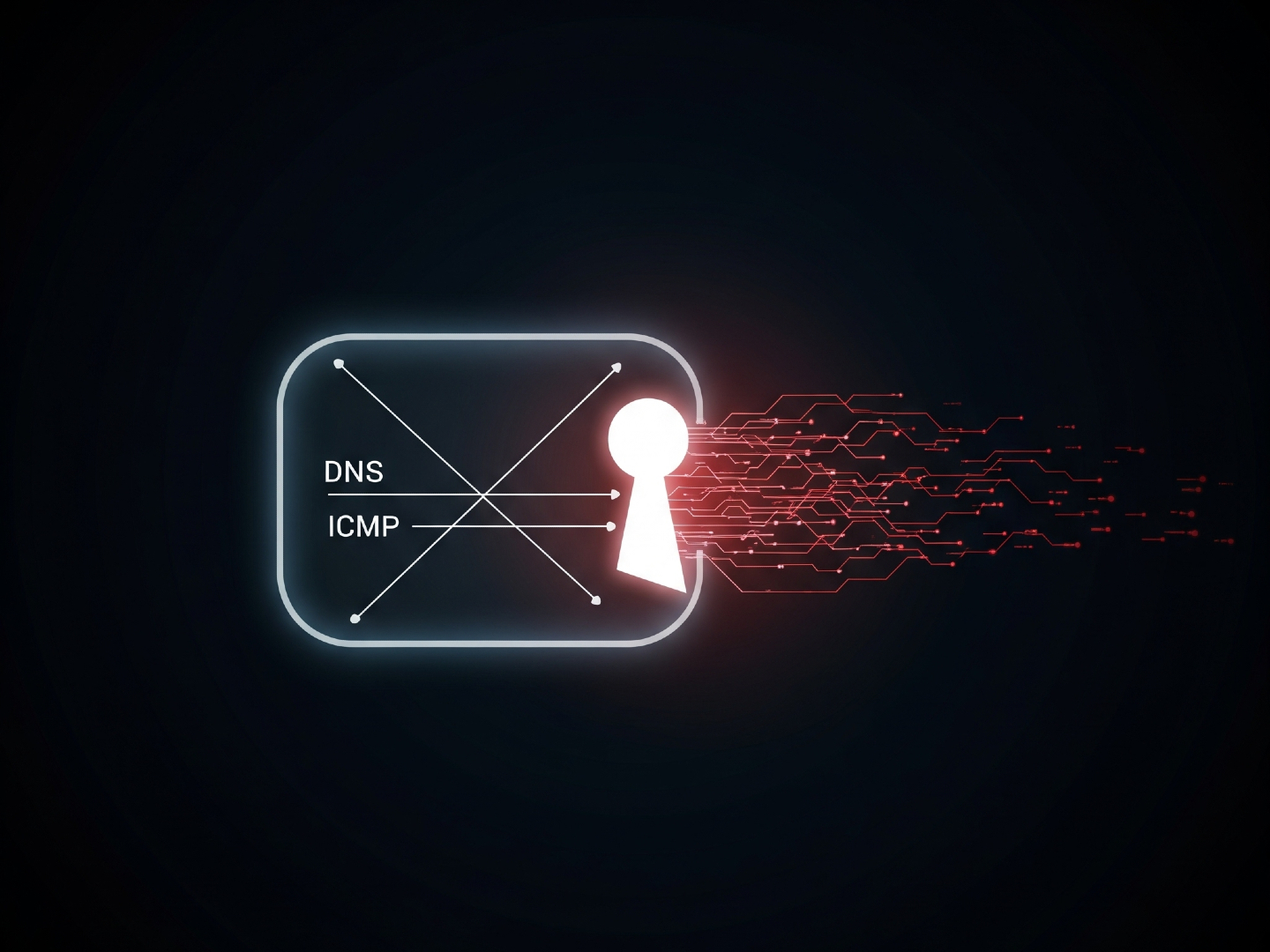
According to research published by Bitdefender and reported by The Hacker News, the threat group behind EggStreme went far beyond typical evasion tactics like swapping file hashes or acquiring cheap command-and-control domains. Instead, the developers modified underlying network protocols, replaced cryptographic algorithms, and restructured infrastructure to subvert static signatures and behavioral detection engines.
Rapid Retooling and Architectural Shifts
EggStreme relies fundamentally on DLL sideloading to execute malicious components in memory while masquerading under standard system library names. The multi-stage framework comprises profiling components (EggStremeFuel, also tracked as RawCookie), execution modules (EggStremeLoader and EggStremeReflectiveLoader), and the primary implant, EggStremeAgent (also known as Gorem RAT).
Following its initial discovery, the operators modified EggStremeFuel's configuration protection mechanisms within two weeks. At the same time, EggStremeLoader shifted encryption schemes away from RC4 to RC5, eventually transitioning to an entirely custom cipher. The operators also dismantled their shared infrastructure model, moving away from relying on a single certificate authority to issuing distinct, campaign-specific digital certificates requiring mutual TLS authentication.
The core implant received significant upgrades as well. Newer builds of EggStremeAgent integrate commands designed for Active Directory reconnaissance, Windows Management Instrumentation (WMI) queries, and TCP traffic forwarding. The agent can also execute raw PowerShell scripts, .NET assemblies, and Portable Executable payloads directly. Notably, the operators omitted the previously observed EggStremeKeylogger component from recent builds, likely to streamline operations and reduce footprint.
Evasion via Passive Listening Backdoors
One of the most consequential adjustments identified by researchers is the introduction of a passive variant of EggStremeAgent. Rather than regularly beaconing outbound to external command-and-control servers—a pattern easily spotted by perimeter network monitoring tools—the new variant opens a local port and silently waits for inbound connections initiated by the operator.
The group's lateral movement tradecraft has evolved in parallel. While earlier campaigns relied on Impacket-like utilities and the agent itself, recent incidents show the attackers staging payloads on unmanaged systems that reside outside the organization's centralized endpoint detection and response (EDR) visibility. From these unmanaged hosts, attackers execute payloads across the network over Server Message Block (SMB) using remote Visual Basic Script (VBScript) files and stolen valid credentials.
Initial compromise methods remain unconfirmed. Investigators noted that early intrusions began from logon scripts located on network shares, while subsequent operations utilized authentic credentials originating from outside managed infrastructure. Beyond the Philippines, analysts observed traces suggesting potential targeting of entities in Taiwan, though researchers hold that assessment with low to medium confidence.
Broader Campaign Context Across Southeast Asia
The renewed EggStreme activity occurs against a backdrop of intensified cyber espionage throughout Southeast Asia. Independent reports confirm that Philippine state institutions have faced overlapping operations from other Chinese-aligned clusters. The prolific Mustang Panda group targeted Philippine government officials using spoofed diplomatic agendas tied to the Laos–Philippines bilateral meeting and ASEAN summits, delivering the PlugX remote access tool via DLL sideloading.
Simultaneously, a threat group known as Earth Alux (or TGR-STA-0049) has targeted regional government entities using tools including the FINALDRAFT backdoor, along with newer implants dubbed PerfectPioneer RAT and KUKURAT. Earth Alux leverages unpatched Microsoft Exchange servers and web shells alongside GlobalProtect lure installers, demonstrating the multi-pronged technical pressure facing public sector networks in the region.
What You Should Do
To defend against advanced evasion tactics and lateral movement exemplified by EggStreme, security teams should implement the following technical controls:
- Enforce Strict DLL Verification: Implement application control policies such as AppLocker or Windows Defender Application Control (WDAC) to restrict DLL loading to authorized directories, preventing sideloading via trusted binaries.
- Audit and Eliminate Unmanaged Endpoints: Maintain complete visibility over the network environment. Isolate or block administrative and SMB access to and from rogue, personal, or legacy devices that lack active EDR coverage.
- Restrict SMB and Admin Shares: Disable SMBv1 entirely, restrict remote file execution over SMB across internal workstation subnets, and monitor the creation of unexpected scheduled tasks or scripts on shared network drives.
- Monitor for Rogue Listening Ports: Deploy host-based network controls and anomaly detection to identify internal systems opening listening ports outside established baselines, which may indicate passive backdoors awaiting inbound sessions.
- Harden WMI and PowerShell Usage: Enable Script Block Logging (Event ID 4104) and restrict PowerShell execution using Constrained Language Mode to limit fileless reconnaissance capabilities.