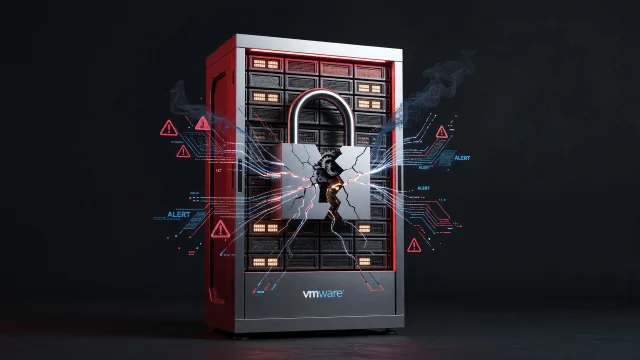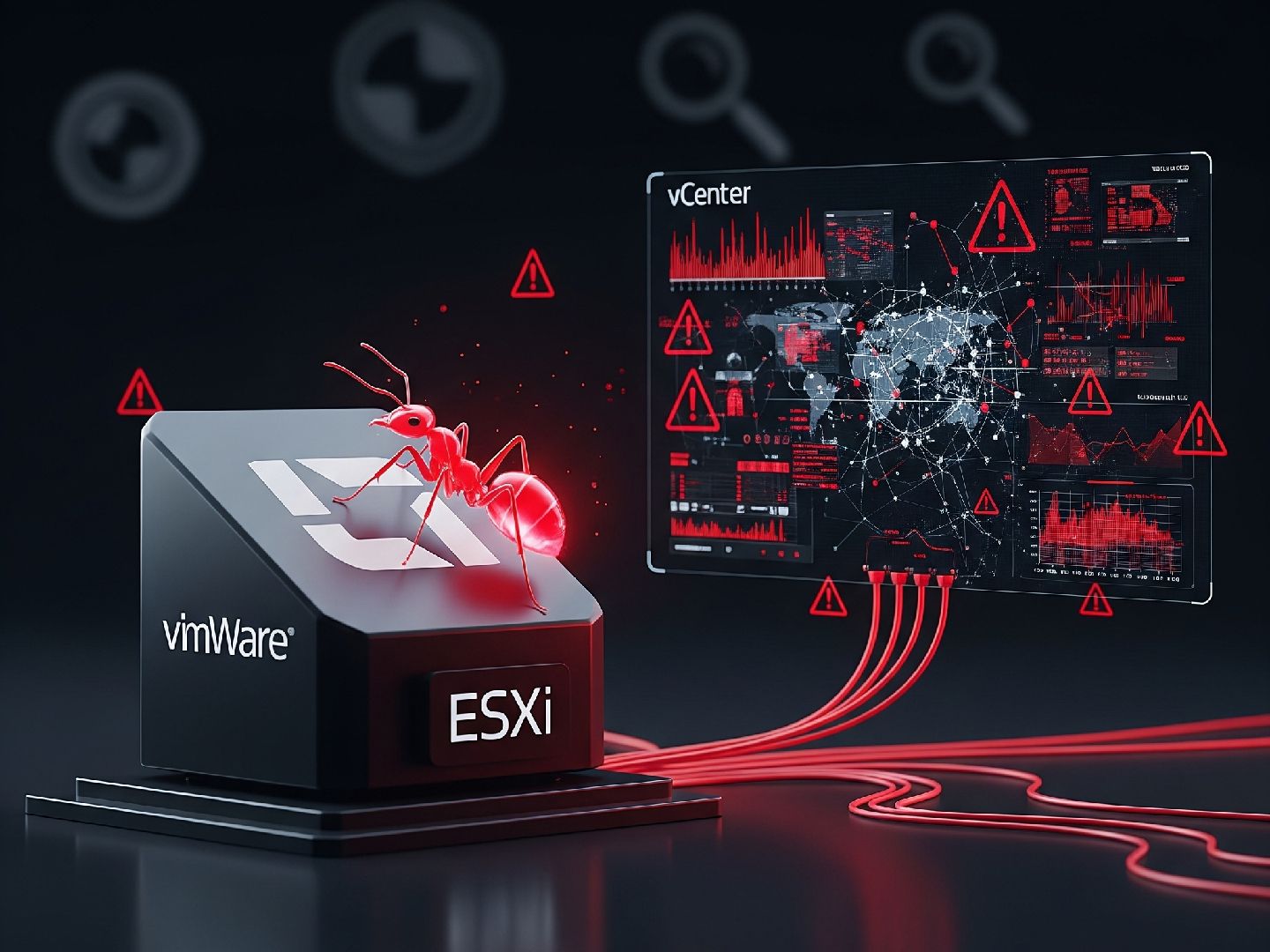
A suspected China-nexus cyber espionage group tracked as Armory Castle has weaponized a critical zero-day vulnerability in VMware vCenter Server to achieve administrative access and siphon sensitive enterprise data. Broadcom released security updates addressing the flaw following investigations by incident responders.
According to reporting from The Hacker News, the vulnerability is tracked as CVE-2026-123890 and carries a maximum severity CVSS rating of 9.8. Threat intelligence teams at Mandiant and Google Threat Intelligence Group observed active exploitation in early September 2026.
Authentication Bypass in Directory Services
The flaw resides in the VMware Directory Service ("vmdird") and stems from an unauthenticated Secure Remote Password (SRP-6a) session key disclosure flaw over Distributed Computing Environment/Remote Procedure Calls (DCE/RPC). Successful exploitation allows an attacker to bypass remote authentication controls completely.
When triggered, the flaw establishes an unauthorized authenticated session under the context of [email protected]. Once administrative control is reached, adversaries can execute arbitrary commands and extract internal databases, including the data.mdb file maintained by the Directory Service.
Armory Castle, an espionage crew previously identified under the moniker UNC5221, automated the exploitation process through a purpose-built Go utility dubbed BONESAW. Researchers noted BONESAW extracts the internal Lightning Memory-Mapped Database (LMDB), tampers with the SAML Security Token Service (STS), and establishes rogue Single Sign-On (SSO) administrator accounts.
Multi-Stage Attack Chain and Lateral Movement
The campaign revealed an intricate intrusion sequence that began outside the virtualization core. The attackers first established an initial foothold by exploiting CVE-2026-102764, a critical zero-day flaw in BeyondTrust Remote Support, deploying a custom proxy tunneler named BARECLAW to manage internal network access.
From the compromised remote appliance, Armory Castle navigated laterally to an internal Linux system, escalated privileges to root, and deployed two JSP web shells called SLIMSAVAGE and CAGEMATCH. The group then conducted reconnaissance using network port scanning, searching for VMware-specific management ports including 5480, 9080, and port 2012, the remote procedure call interface used by vCenter SSO.
Armed with access through port 2012, the threat actors executed BONESAW alongside several custom components:
- SAWSNAKE: A Go utility adapted from an open-source tool to bypass vCenter SAML authentication, forge session tokens, and bypass multi-factor authentication requirements via Golden SAML attacks.
- BEARBONES: A modified Dropbear SSH backdoor configured to ignore system password verification, capture plaintext user credentials, and listen for inbound connections on TCP port 33992.
- LAZYBONES: A Go-based backdoor dropped onto internal Linux appliances that uses Slack channels for command-and-control operations, command execution, and file movement.
After acquiring administrator credentials, the attackers enabled SSH on the vCenter server using a PUT request to the vCenter Server Appliance Management Interface (VAMI) REST API. They subsequently mounted Virtual Machine File System (VMFS) volumes across ESXi hosts, placed unauthorized public keys into the root authorized_keys file, and downloaded archived virtual disk data via HTTP requests redirected through the compromised BeyondTrust appliance.
Affected Products and Vendor Response
Broadcom issued security advisories and updates addressing CVE-2026-123890 across multiple virtualization product lines on November 19, 2026. Patched versions include:
- VMware vSphere Foundation and Cloud Foundation 9.1.x (fixed in 9.1.1.0200)
- VMware vSphere Foundation and Cloud Foundation 9.0.x (fixed in 9.0.2.0200)
- VMware vCenter Server 8.0 (fixed in 8.0 U3m)
- VMware Cloud Foundation 5.2.5
- VMware Telco Cloud Platform and Telco Cloud Infrastructure (remediated via vCenter 8.0 U3m)
Customers operating unsupported versions, such as vCenter 7.0, must contact vendor support under active extended service agreements to receive dedicated remediation guidance.
What You Should Do
System administrators and security teams managing VMware infrastructure should execute immediate containment and verification protocols:
- Apply Vendor Patches: Upgrade all vulnerable vCenter Server and Cloud Foundation deployments to the corresponding patched releases immediately.
- Restrict Network Exposure: Isolate management interfaces from the public internet and untrusted subnets. Block inbound access to internal ports 2012, 5480, and 9080 except from strictly authorized administrative jump hosts.
- Audit Administrator Accounts: Inspect the vSphere SSO domain for newly created or anomalous administrative accounts, particularly those matching patterns like
sps-*@vsphere.local. - Inspect ESXi Configurations: Verify the integrity of
authorized_keysfiles across all ESXi hypervisor hosts to identify unapproved administrative keys, and audit VAMI API logs for unexpected modifications to SSH service states. - Monitor Outbound Traffic: Monitor appliance egress traffic for unauthorized Slack API communications or unusual outbound data transfers directed through internal network appliances.